 Color Chart Reference
Soil Classification Chart - The classification system can be applied to. For final design of important structures, visual soil classification must be supplemented by laboratory tests to determine soil engineering properties such as permeability, shear strength, and. Many typical soil properties given in this book refer to soil classes, as defined in commonly used soil classification systems. Where soils are configured in layers, i.e., where a layered geologic structure exists, the soil must be classified on the basis of the soil classification of the weakest soil layer. This page provides a summary of the more commonly used classification systems. Soils are typically classified based on a specific property, such as infiltration or texture.
 Fine-Grained Soil Classification Plasticity Chart.jpg)
Uscs Soil Classification Chart
The classification system can be applied to. This appendix gives a summary of the more common systems and the. This page provides a summary of the more commonly used classification systems. Where soils are configured in layers, i.e., where a layered geologic structure exists, the soil must be classified on the basis of the soil classification of the weakest soil layer.

This page provides a summary of the more commonly used classification systems. This appendix gives a summary of the more common systems and the. For final design of important structures, visual soil classification must be supplemented by laboratory tests to determine soil engineering properties such as permeability, shear strength, and. Soils are typically classified based on a specific property, such as infiltration or texture.
Uscs Soil Classification Chart
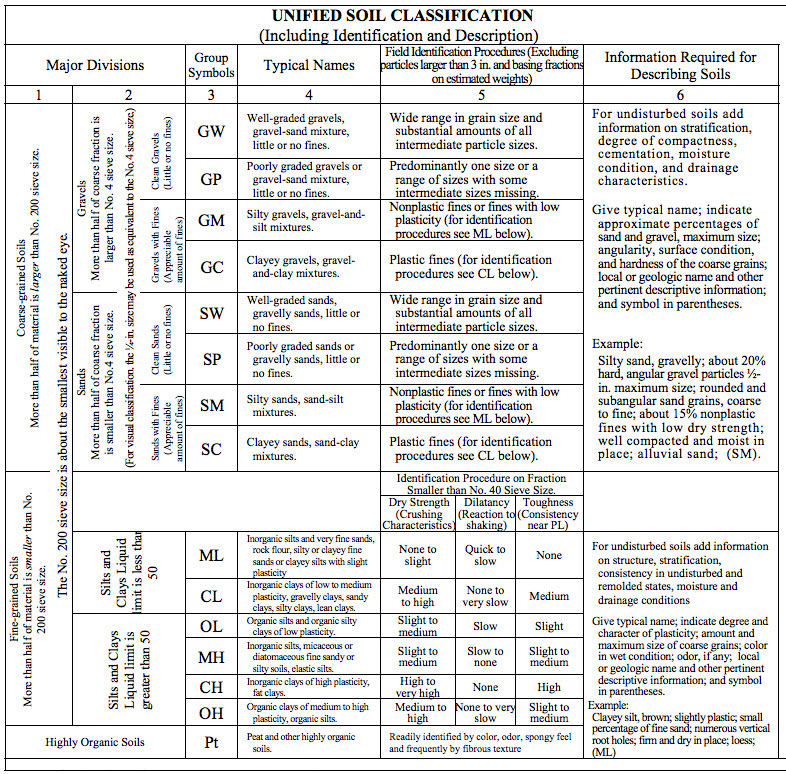
Soils are typically classified based on a specific property, such as infiltration or texture. The unified soil classification system has provided a plasticity chart based on the data on the liquid limit and the plasticity index. The classification system can be applied to. The unified soil classification system (uscs) is a soil classification system used in engineering and geology to describe the texture and grain size of a soil.

Uscs Soil Classification Chart
For final design of important structures, visual soil classification must be supplemented by laboratory tests to determine soil engineering properties such as permeability, shear strength, and. To ensure proper application of the criteria for classifying soils, the latest version of the “keys to soil taxonomy” is needed. Soils are typically classified based on a specific property, such as infiltration or texture.

For final design of important structures, visual soil classification must be supplemented by laboratory tests to determine soil engineering properties such as permeability, shear strength, and. This page provides a summary of the more commonly used classification systems. The unified soil classification system (uscs) is a soil classification system used in engineering and geology to describe the texture and grain size of a soil.
The Unified Soil Classification System Has Provided A Plasticity
Many typical soil properties given in this book refer to soil classes, as defined in commonly used soil classification systems. Where soils are configured in layers, i.e., where a layered geologic structure exists, the soil must be classified on the basis of the soil classification of the weakest soil layer. To ensure proper application of the criteria for classifying soils, the latest version of the “keys to soil taxonomy” is needed. The unified soil classification system (uscs) is a soil classification system used in engineering and geology to describe the texture and grain size of a soil.
Soils Are Typically Classified Based On A Specific Property,
This appendix gives a summary of the more common systems and the. The classification system can be applied to. This page provides a summary of the more commonly used classification systems. Depending on percentage of fines (fraction smaller than no.
This Guide Omits All Information Needed To Classify Soils
For final design of important structures, visual soil classification must be supplemented by laboratory tests to determine soil engineering properties such as permeability, shear strength, and.