-1.png)
Printable Glycemic Index Chart
Printable Glycemic Index Chart - Because carbohydrates, or carbs, such as rice, pasta, bread, and fruit, raise blood sugar more, and more quickly, than fats or proteins do. This chart breaks foods down into simple categories and provides glycemic index values. Foods are categorized as low gi (55 or less), medium gi (56 to 69) and high gi (70 or more). Eating foods with a lower gi may result in a more gradual rise in your blood sugar level. Glycemic index (gi) is an objective way of measuring this effect. It is a sign of the quality of carbohydrates in the food.
This whole health tool defines glycemic index and glycemic load and explains how they can be used. This page provides a comprehensive gi index chart and their corresponding glycemic index and glycemic load values for easy reference. The majority of our glycemic index values are taken from the international tables of glycemic index values. Foods are categorized as low gi (55 or less), medium gi (56 to 69) and high gi (70 or more). Glycemic index (gi) is an objective way of measuring this effect.

The Glycemic Index and Carbs Pritchett and Hull
Foods with a high gi increase blood sugar higher and faster than foods with a low gi. This chart breaks foods down into simple categories and provides glycemic index values. Glycemic index and glycemic load food chart the following table provides the glycemic index (gi) and glycemic load (gl) values of selected foods. The glycemic index (gi) is a measure.

Pdf Printable Full Glycemic Index Chart Free Printable Charts
A low gi is a sign of better quality. Glycemic index and glycemic load food chart the following table provides the glycemic index (gi) and glycemic load (gl) values of selected foods. The glycemic index, or gi, uses a scale of numbers from 1 to 100 to rank carbohydrate foods by how quickly a serving size of each raises blood.
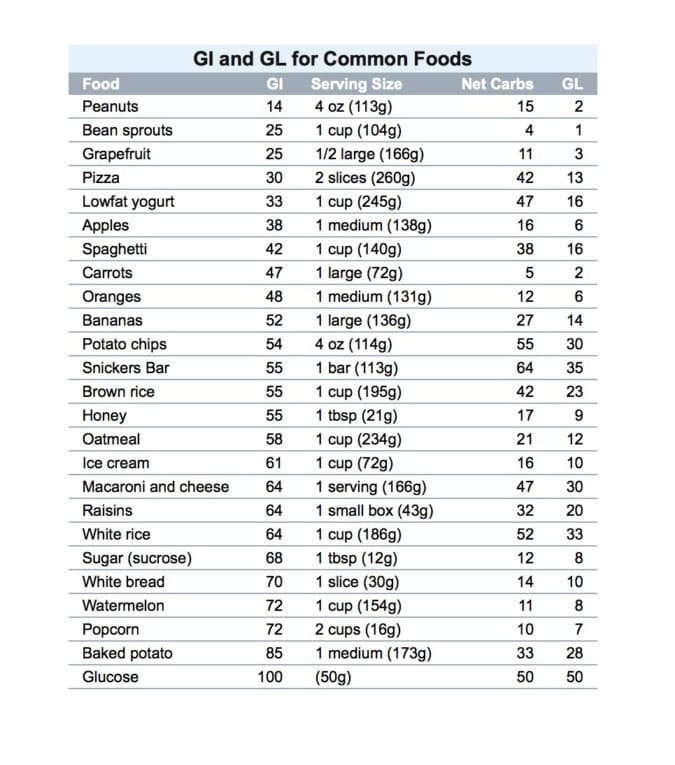
Printable Glycemic Index Chart Low Free download and print for you.
Gi is a measure of how fast a food increases your blood. It groups foods by low, medium, and high gi, so making healthier choices becomes a breeze. Glycemic index and glycemic load food chart the following table provides the glycemic index (gi) and glycemic load (gl) values of selected foods. Foods are categorized as low gi (55 or less),.

Glycemic Index Printable Chart
The glycemic index (gi) is a measure of how fast a food raises the blood sugar level. The glycemic index, or gi, uses a scale of numbers from 1 to 100 to rank carbohydrate foods by how quickly a serving size of each raises blood sugar. Foods are categorized as low gi (55 or less), medium gi (56 to 69).

Glycemic Index Printable Chart
It is a sign of the quality of carbohydrates in the food. We got you covered with a glycemic index (gi) food chart that's easy to print. The glycemic index, or gi, uses a scale of numbers from 1 to 100 to rank carbohydrate foods by how quickly a serving size of each raises blood sugar. The glycemic load (gl).
Printable Glycemic Index Chart - We put together a printable low glycemic food chart so it's easier for people to choose foods that won't spike their blood sugar. The glycemic index, or gi, uses a scale of numbers from 1 to 100 to rank carbohydrate foods by how quickly a serving size of each raises blood sugar. The majority of our glycemic index values are taken from the international tables of glycemic index values. The glycemic load (gl) adds the amount of carbohydrate (quantity) into the. Our glycemic index chart of over three hundred foods and beverages has been collected by looking at all reliable sources available from researchers. The glycemic index (gi) is a measure of how fast a food raises the blood sugar level.
Foods with higher glycemic index values are at the top of the table, while foods with lower glycemic index values are at the end of the table. A low gi is a sign of better quality. Our glycemic index chart of over three hundred foods and beverages has been collected by looking at all reliable sources available from researchers. This whole health tool defines glycemic index and glycemic load and explains how they can be used. Gi is a measure of how fast a food increases your blood.
The Majority Of Our Glycemic Index Values Are Taken From The International Tables Of Glycemic Index Values.
Our glycemic index chart of over three hundred foods and beverages has been collected by looking at all reliable sources available from researchers. This chart breaks foods down into simple categories and provides glycemic index values. We got you covered with a glycemic index (gi) food chart that's easy to print. We put together a printable low glycemic food chart so it's easier for people to choose foods that won't spike their blood sugar.
Foods Are Categorized As Low Gi (55 Or Less), Medium Gi (56 To 69) And High Gi (70 Or More).
It groups foods by low, medium, and high gi, so making healthier choices becomes a breeze. A low gi is a sign of better quality. The glycemic index (gi) is a measure of how fast a food raises the blood sugar level. Foods with a high gi increase blood sugar higher and faster than foods with a low gi.
Eating Foods With A Lower Gi May Result In A More Gradual Rise In Your Blood Sugar Level.
The glycemic load (gl) adds the amount of carbohydrate (quantity) into the. Glycemic index (gi) is an objective way of measuring this effect. Because carbohydrates, or carbs, such as rice, pasta, bread, and fruit, raise blood sugar more, and more quickly, than fats or proteins do. This whole health tool defines glycemic index and glycemic load and explains how they can be used.
Handy For Grocery Shopping Or Meal Planning, It Helps In Managing Blood Sugar Levels Effectively.
It is a sign of the quality of carbohydrates in the food. This page provides a comprehensive gi index chart and their corresponding glycemic index and glycemic load values for easy reference. Glycemic index and glycemic load food chart the following table provides the glycemic index (gi) and glycemic load (gl) values of selected foods. Gi is a measure of how fast a food increases your blood.